How Large Indian Companies Can Unlock Cash Flow From Existing LCs & Bank Guarantees
A practical guide for Indian corporates, manufacturers, EPC contractors, commodity traders, and large industries that hold Letters of Credit, Bank Guarantees, or SBLCs but need better cash flow movement through structured receiving bank facilities.

Contents
Many large Indian companies already hold strong banking instruments such as Letters of Credit, Bank Guarantees, SBLCs, trade contracts, and receivables. However, these instruments do not always translate into immediate working capital. The real challenge is often not opportunity — it is liquidity movement.
Across India, large corporates in manufacturing, EPC, infrastructure, commodities, steel, oil and gas, logistics, and import-export sectors may have significant contracts and banking-backed transactions but still face operational cash flow limitations.
This is where structured receiving bank facilities and trade finance advisory can support qualified transactions by helping companies create a better banking route for receiving, coordinating, and moving funds connected to international business activity.
Understanding the Cash Flow Problem in Large Indian Companies
Large Indian companies often operate with major purchase orders, international supply agreements, project contracts, long payment cycles, and high-value banking instruments. Even when the company has strong business activity, working capital may remain locked in documentation, settlement cycles, shipment timelines, or banking processes.
In many cases, the company does not lack contracts. It does not lack buyers. It does not lack business potential. The challenge is that the financial structure is not moving fast enough to support operational liquidity.
A company may have large LCs, BGs, SBLCs, or contract-backed transactions, but without the right receiving facility, liquidity can remain delayed, restricted, or difficult to use for daily operations.
What Are LCs, Bank Guarantees, and SBLCs?
Letter of Credit
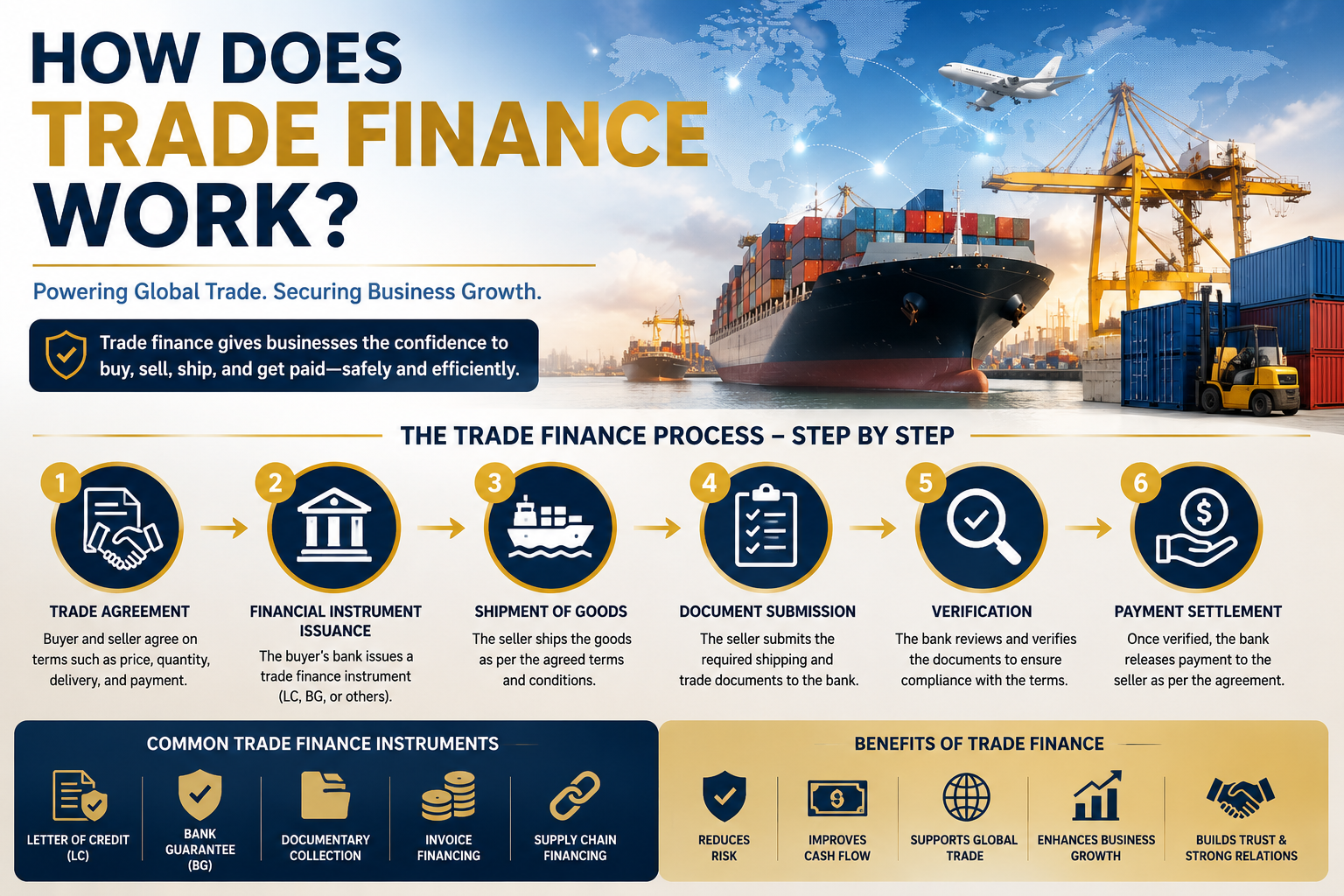
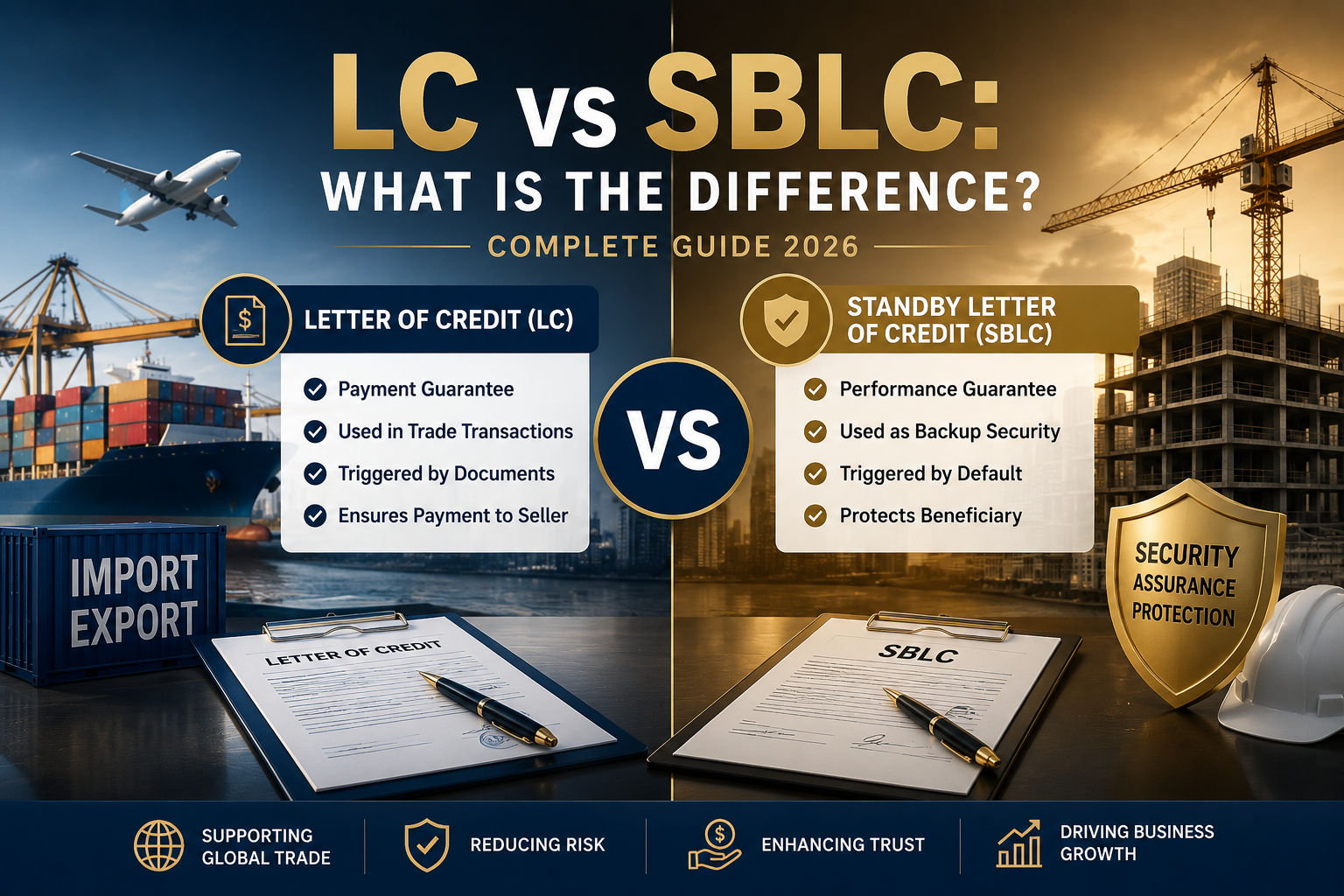
A Letter of Credit is a bank-issued payment undertaking commonly used in trade transactions. It supports payment between buyer and seller once agreed documentary conditions are met.
Bank Guarantee
A Bank Guarantee is a bank-backed commitment that supports contractual, payment, tender, performance, or project-related obligations. It is widely used in infrastructure, EPC, government contracts, procurement, and industrial supply transactions.
SBLC
A Standby Letter of Credit is a banking instrument that works as backup security if the applicant fails to pay or perform according to the agreed terms. SBLCs are often used in cross-border commercial transactions, structured finance, and high-value contracts.
| Instrument | Main Purpose | Common Use | Cash Flow Challenge |
|---|---|---|---|
| Letter of Credit | Trade payment support | Imports, exports, supplier payments | Payment may depend on documents, shipment, and bank processing |
| Bank Guarantee | Contractual assurance | EPC, tenders, infrastructure, performance security | Instrument supports credibility but does not automatically create working capital |
| SBLC | Backup payment or performance security | International contracts, structured transactions, trade security | Liquidity depends on structure, counterparties, and receiving arrangements |
What Is a Receiving Bank Facility?
A receiving bank facility is a structured banking arrangement that supports the receipt, coordination, and movement of funds connected to commercial, corporate, or trade finance transactions.
For large Indian companies, this can be important when handling high-value LCs, BG-backed contracts, SBLC structures, international settlements, supplier payments, project receivables, or cross-border trade transactions.
A receiving bank facility helps create a proper banking route for receiving and managing transaction flows linked to trade finance, banking instruments, and corporate commercial activity.
Have an LC, BG, SBLC, or large trade contract?
National Finance can review your transaction structure and help identify whether a receiving bank facility may support your liquidity movement.
How Receiving Facilities Can Help Unlock Cash Flow
1. Improved Liquidity Movement
A structured receiving facility can help support smoother movement of incoming funds connected to corporate transactions, trade finance flows, and banking-backed commercial activity.
2. Better International Transaction Coordination
Cross-border transactions may involve buyers, suppliers, correspondent banks, compliance teams, shipping documents, contracts, and multiple jurisdictions. Proper structuring helps reduce friction and improve transaction clarity.
3. Working Capital Efficiency
When transaction flows are coordinated properly, companies may improve the timing of cash inflows and reduce pressure on day-to-day operations, supplier obligations, payroll, procurement, and project execution.
4. Support for Large Trade and Industrial Operations
Large Indian industries often need liquidity to execute contracts, source materials, fulfill shipments, and manage suppliers. Receiving bank structures can support transaction continuity for qualified requirements.
Industries That Commonly Benefit
Receiving bank facilities and structured trade finance solutions are especially relevant for large Indian companies involved in high-value trade, project execution, and international settlement cycles.
- EPC and infrastructure companies
- Steel and metals businesses
- Oil and gas companies
- Commodity trading groups
- Manufacturing companies
- Importers and exporters
- Logistics and shipping companies
- Heavy equipment suppliers
- Construction and project-based companies
- Power and energy businesses
- Mining and raw material suppliers
- Large procurement and industrial supply companies
Typical Transaction Review Process
Each transaction must be reviewed based on its structure, documents, counterparties, bank requirements, and commercial purpose.
Why Large Indian Corporates Need International Structuring
Many large Indian businesses are expanding into global markets, sourcing from international suppliers, exporting to new buyers, and participating in cross-border industrial opportunities. These transactions often require more than a standard banking product.
They may require structured banking support, professional documentation review, receiving facility coordination, trade finance advisory, and an understanding of international transaction requirements.
Key Benefits of Structured Receiving Facilities
- Support cash flow movement from existing banking-backed transactions
- Improve liquidity coordination for qualified corporate requirements
- Assist with LC, BG, and SBLC-related transaction handling
- Support large-scale trade, import, export, and industrial operations
- Help companies manage complex cross-border settlement requirements
- Improve working capital efficiency for active business transactions
- Support operational continuity for large projects and supply chains
How National Finance Supports Indian Corporate Transactions
National Finance Consultancy FZC assists qualified companies involved in international trade finance, receiving bank facility requirements, LC transactions, Bank Guarantee structures, SBLC-related transactions, corporate funding coordination, and structured banking advisory.
For Indian corporates, the focus is to review the transaction requirement, understand the banking instrument involved, assess the commercial purpose, and guide the appropriate structuring approach for receiving and liquidity movement.
LC transactions, Bank Guarantees, SBLC-related structures, receiving bank facilities, international trade finance, corporate funding coordination, and cross-border banking advisory for qualified business transactions.
Conclusion
Large Indian companies often hold valuable financial instruments and strong business opportunities, but liquidity may still remain locked due to delayed settlements, banking limitations, or insufficient receiving structures.
Structured receiving bank facilities can help qualified companies improve transaction flow, support working capital movement, and create better coordination for international trade and commercial operations.
For companies holding LCs, Bank Guarantees, SBLCs, or major trade contracts, the right structure can make the difference between having opportunity on paper and creating usable operational cash flow.

Reviewed by National Finance Insights
National Finance publishes practical finance guides for businesses covering trade finance, receiving bank facilities, Letters of Credit, SBLC, Bank Guarantees, corporate funding, structured finance, and transaction readiness.
Receiving Bank Facility FAQs
Common questions Indian companies ask about unlocking cash flow from LCs, Bank Guarantees, SBLCs, and trade finance transactions.
Can an LC or Bank Guarantee help improve cash flow?
An LC or Bank Guarantee can support transaction credibility, but cash flow improvement depends on the structure, receiving arrangement, documents, counterparties, and banking process involved.
What is a receiving bank facility?
A receiving bank facility is a structured banking arrangement that supports the receipt, coordination, and movement of funds connected to trade finance, corporate, or commercial transactions.
Which companies need receiving bank support?
Receiving bank support is usually relevant for medium to large companies involved in LCs, BGs, SBLCs, international settlements, import-export transactions, project contracts, and high-value commercial transactions.
Does National Finance work with Indian companies?
Yes. National Finance supports qualified Indian and international companies requiring trade finance advisory, receiving facility coordination, LC, BG, SBLC, and structured banking support.
What documents are usually required for review?
Common documents may include the LC, BG, SBLC, contract, purchase order, invoice, company profile, bank details, transaction summary, and supporting trade documents.
Related finance topics
Continue reading practical guides connected to trade finance, banking instruments, receiving facilities, and structured corporate finance.
Need receiving bank facility support for your LC, BG, or SBLC transaction?
If your company has large Letters of Credit, Bank Guarantees, SBLCs, trade contracts, or international transactions and requires structured receiving bank support, National Finance can review the requirement and guide the next step.