What Is Trade Finance in UAE? Complete Guide for Businesses
A practical guide for UAE businesses on trade finance, Letters of Credit, Bank Guarantees, SBLCs, working capital support, transaction risk, and structured financial advisory.
Contents
Trade finance helps businesses in the UAE complete domestic and international transactions with stronger payment security, better liquidity planning, and clearer execution structure.
For companies involved in importing, exporting, contracting, commodities, manufacturing, logistics, or supplier-backed transactions, trade finance can be the difference between a delayed opportunity and a properly structured commercial deal.
What is Trade Finance?
Trade finance is a group of financial instruments and advisory solutions used to support commercial transactions between buyers, sellers, importers, exporters, suppliers, contractors, and financial institutions.
It is designed to reduce transaction risk, improve payment confidence, support supplier trust, and help businesses manage timing gaps between delivery, documentation, payment, and collection.
Trade finance helps a business complete a trade transaction when payment timing, documentation, supplier confidence, contract performance, or working capital may otherwise become a challenge.
Why Trade Finance Is Important in UAE
The UAE is a major regional hub for trade, logistics, contracting, commodities, and cross-border business. Many companies operating from Dubai, Sharjah, Abu Dhabi, and the wider UAE deal with international suppliers, large transaction values, payment timing gaps, and complex documentation requirements.
Trade finance supports UAE businesses by helping them:
- Secure import, export, supplier, and project-related transactions.
- Improve cash flow during long transaction or payment cycles.
- Reduce buyer, seller, bank, and counterparty risk.
- Support larger contracts with stronger financial credibility.
- Organize transaction documentation before approaching banks or counterparties.
Handling an active trade transaction?
Share your transaction type, estimated amount, timeline, supplier or buyer details, and available documents so the structure can be reviewed properly.
Key Trade Finance Instruments in UAE
Trade finance may involve different instruments depending on the nature of the transaction, the buyer, the seller, the bank, the contract, and the required level of security.
1. Letter of Credit (LC)
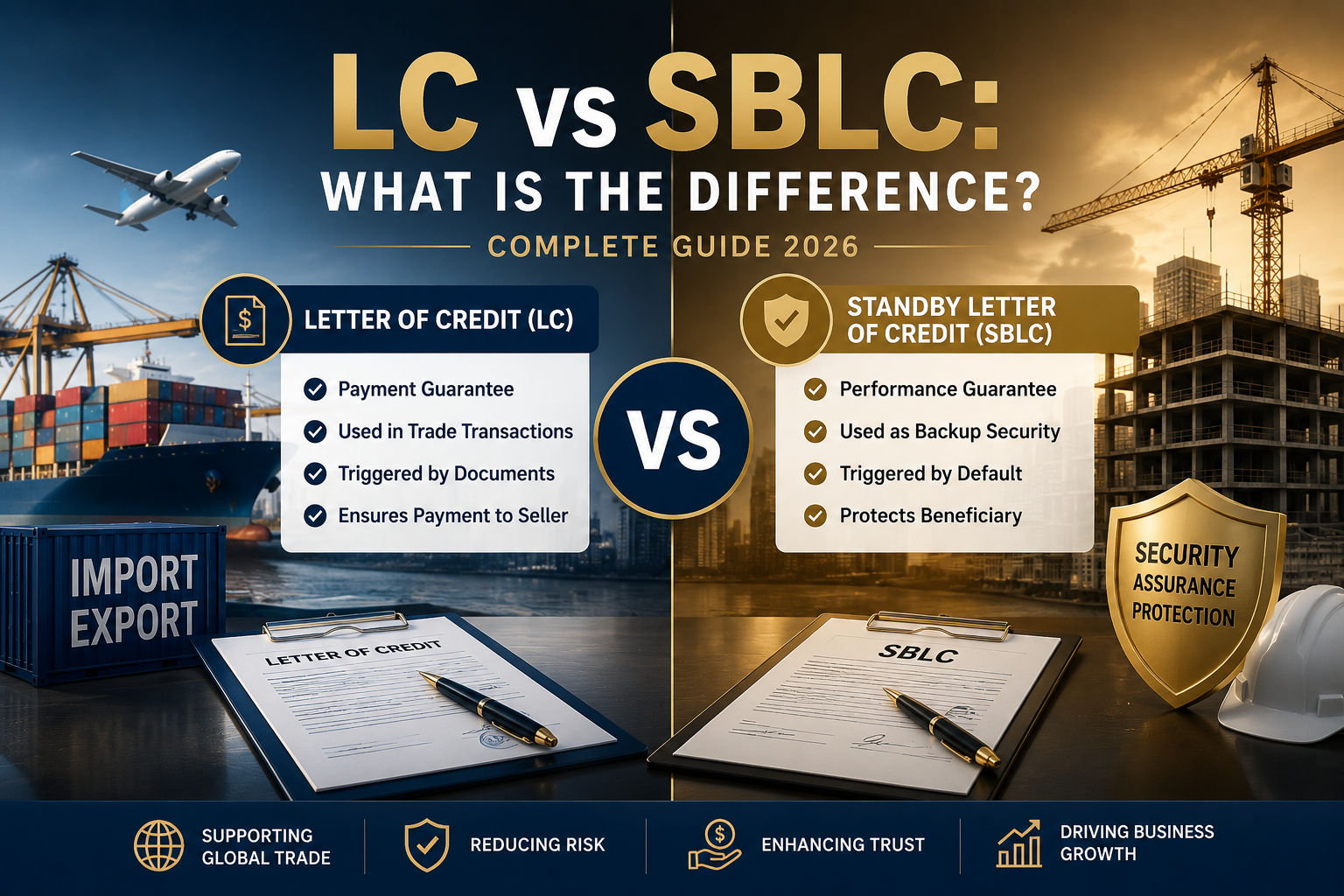
A Letter of Credit is a bank-issued undertaking that supports payment to a seller once agreed conditions and documents are met. It is commonly used in import and export transactions where both parties need stronger payment security.
2. Bank Guarantee (BG)
A Bank Guarantee supports contractual obligations. It gives a beneficiary financial assurance if the applicant fails to meet agreed obligations under the guarantee terms.
3. Standby Letter of Credit (SBLC)
An SBLC acts as a financial backup. It is often used when a beneficiary requires assurance that payment or performance can be supported if the applicant fails to fulfill the obligation.
4. Proof of Funds (POF)
Proof of Funds may be used to show financial capacity during negotiation, pre-contract, or transaction-verification stages, especially for larger trade or investment-linked requirements.
5. Invoice or Cheque Discounting
Invoice and cheque discounting can help businesses convert receivables into working capital, supporting liquidity while waiting for collection from customers or project counterparties.
| Instrument | Common Use | Best For |
|---|---|---|
| Letter of Credit | Payment security for trade documents | Importers and exporters |
| Bank Guarantee | Contractual or performance assurance | Contractors, suppliers, project companies |
| SBLC | Backup payment or performance support | Larger transactions requiring assurance |
| Proof of Funds | Financial capacity confirmation | Pre-contract or negotiation stages |
| Invoice Discounting | Receivable-backed liquidity | Businesses waiting for customer payment |
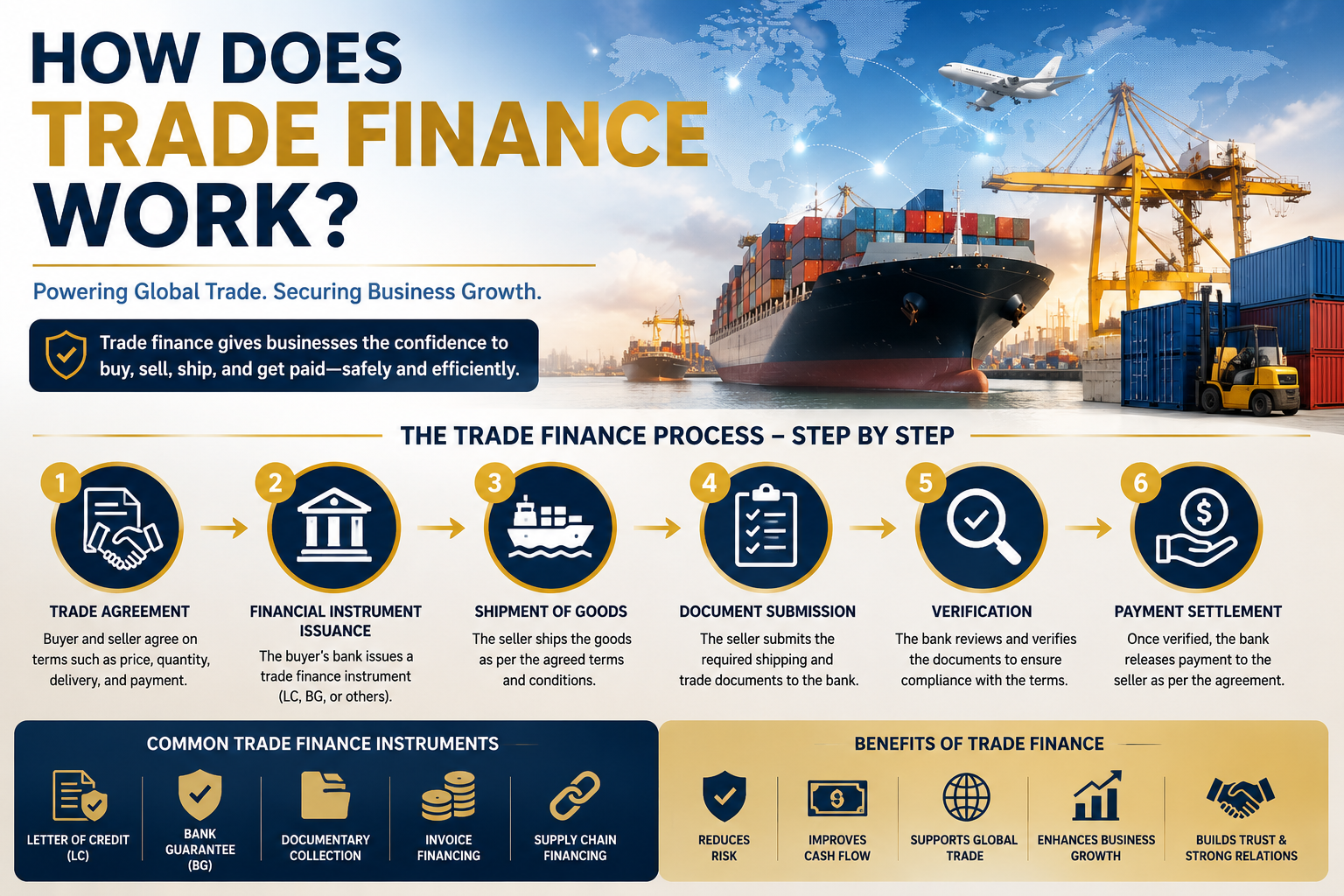
How Trade Finance Works
Trade finance should follow a structured process so the transaction is properly reviewed, documented, and positioned before execution.
Who Uses Trade Finance in UAE?
Trade finance is widely used across sectors where transaction security, supplier confidence, cash flow timing, or contract performance is important.
- Import and export companies
- Construction and contracting firms
- Commodity traders
- Oil and gas suppliers
- Manufacturers and distributors
- Government-related contractors and suppliers
- SMEs handling larger trade or supplier requirements
Trade Finance vs Business Loan
Many businesses confuse trade finance with a normal business loan, but they are not the same. A business loan is usually general funding with a repayment schedule. Trade finance is usually linked to a specific transaction, contract, invoice, shipment, receivable, or payment obligation.
It is structured around a specific commercial requirement, while a general business loan is usually broader working capital or expansion funding.
Documents Commonly Needed for Trade Finance
The exact documentation depends on the instrument and transaction type, but businesses should usually prepare the following before seeking support:
- Trade license and company documents
- Buyer, seller, supplier, or beneficiary details
- Invoice, proforma invoice, purchase order, or contract
- Bank statements or financial records where applicable
- Shipment, delivery, or project documents if available
- Clear explanation of amount, purpose, timeline, and repayment or settlement source
Common Challenges Without Trade Finance
Without proper financial structuring, businesses may face delayed payments, supplier hesitation, weak documentation, limited working capital, and difficulty supporting larger commercial opportunities.
- Delayed payments from buyers
- Limited supplier trust
- Cash flow pressure during transaction cycles
- Inability to support larger contracts
- Higher risk in cross-border transactions
Choosing the Right Trade Finance Partner in UAE
A suitable advisory partner should understand structured finance, banking instruments, documentation discipline, international transactions, and how to match the commercial need with the correct financial structure.
At National Finance, the focus is on understanding the real business requirement first, then guiding the client toward a suitable path across trade finance, banking instruments, corporate funding, or related structured finance solutions.
Conclusion
Trade finance is a practical requirement for many businesses in the UAE. It helps companies operate with stronger confidence across domestic and international transactions while managing risk, documentation, liquidity, and execution.
For businesses handling imports, exports, contracting, commodities, supplier payments, LC, BG, SBLC, or receivable-backed requirements, trade finance can provide the structure needed to move a transaction forward.

Reviewed by National Finance Insights
National Finance publishes practical finance guides for UAE businesses covering structured finance, trade finance, corporate funding, banking instruments, and transaction readiness.
Trade Finance FAQs
Common questions businesses ask before reviewing a trade finance requirement in the UAE.
Is trade finance the same as a business loan?
No. Trade finance is usually linked to a specific transaction, shipment, invoice, contract, or payment obligation. A business loan is usually broader funding with a repayment schedule.
Which companies use trade finance in UAE?
Importers, exporters, contractors, commodity traders, distributors, manufacturers, suppliers, and SMEs handling larger commercial transactions commonly use trade finance.
What documents are needed for trade finance?
Common documents include company documents, trade license, invoices, contracts, purchase orders, supplier or buyer details, bank statements, and a clear explanation of the transaction.
Can trade finance support international transactions?
Yes. Trade finance is often used for cross-border transactions where payment security, supplier confidence, bank documentation, and delivery timing are important.
Related finance topics
Continue reading practical guides connected to trade finance, structured instruments, and business funding in the UAE.
Letters of Credit in UAE
Understand how LC structures support secure import and export transactions.
Bank Guarantees in UAE
Learn how BGs support contracts, suppliers, projects, and business obligations.
SBLC Solutions
See how standby letters of credit provide financial backup for larger transactions.
Discuss your trade finance requirement with National Finance.
If your business is handling an active transaction involving import, export, contracting, supplier payment, LC, BG, or SBLC requirements, our team can review the structure and guide the next step.