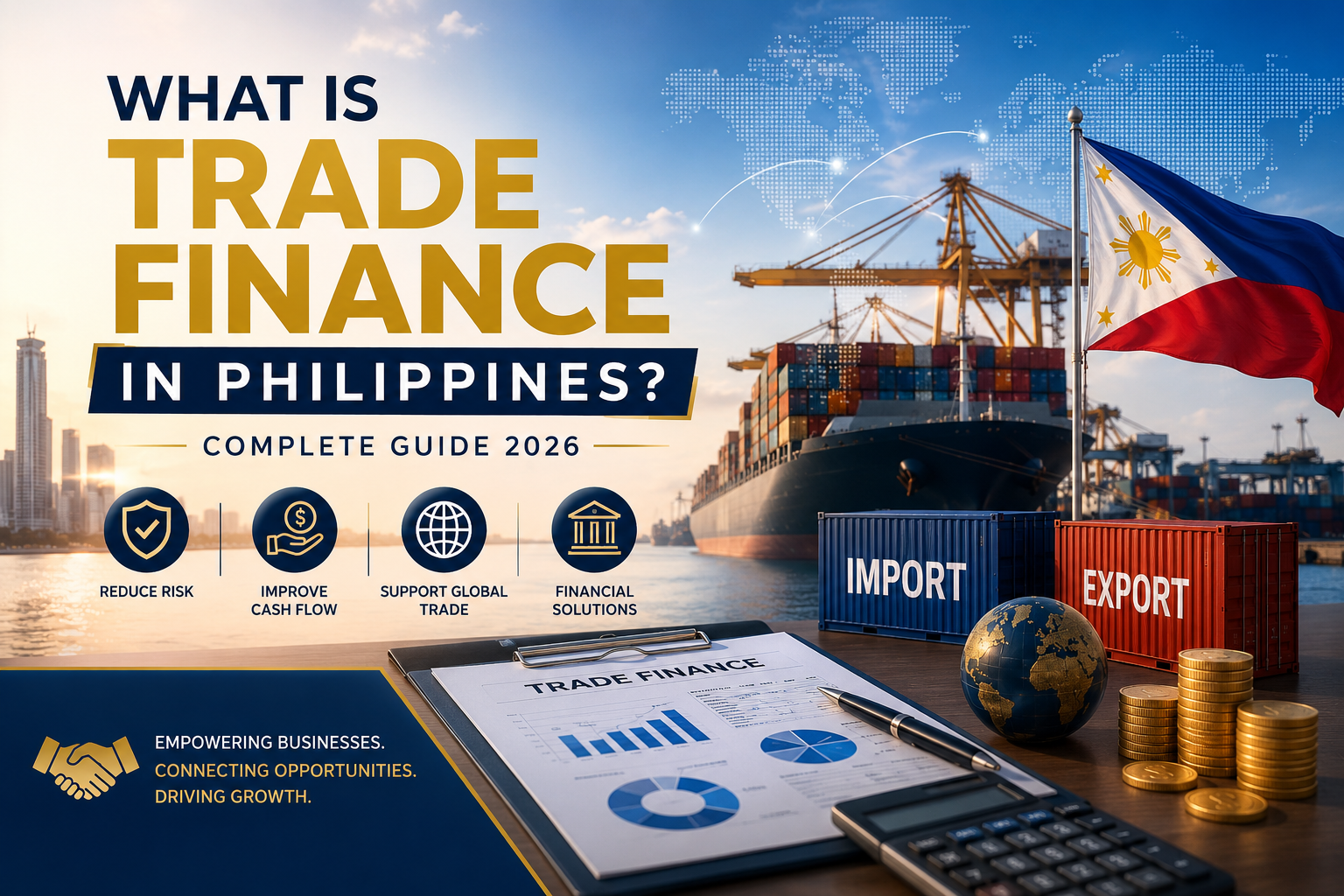
What Is Trade Finance in Philippines? Complete Guide 2026
A practical guide for Philippine importers, exporters, SMEs, suppliers, and corporate businesses on trade finance, Letters of Credit, Bank Guarantees, invoice finance, documentation, and cross-border transaction support.
Contents
Trade finance in the Philippines refers to financial products and banking solutions that help businesses manage domestic and international trade transactions safely and efficiently.
It enables importers, exporters, suppliers, and buyers to reduce payment risks, improve cash flow, and complete cross-border commerce with stronger confidence. For companies trading with China, Japan, Korea, the UAE, Europe, ASEAN markets, or global suppliers, trade finance can provide the structure needed to manage payment timing, documentation, shipment risk, and working capital.
What Is Trade Finance?
Trade finance acts as a bridge between buyers and sellers involved in trade transactions. Instead of relying only on trust, banks and financial institutions provide guarantees, financing, and payment mechanisms that help protect both sides of the transaction.
For example, a Philippine importer purchasing machinery from China may want assurance that goods will arrive before final payment is released. At the same time, an exporter in Manila shipping products to the UAE may need working capital before receiving final payment from the buyer.
Trade finance helps a business complete a transaction when payment security, supplier trust, shipping documents, delivery timing, or cash flow could otherwise become a challenge.
Why Trade Finance Is Important in the Philippines
The Philippine economy is closely connected to imports, exports, logistics, manufacturing, agriculture, construction, retail distribution, and international supply chains. Businesses import raw materials, equipment, fuel, machinery, construction materials, and consumer products while exporting electronics, semiconductors, coconut products, garments, agricultural goods, and seafood.
Trade finance is important because it helps Philippine businesses:
- Improve cash flow during long payment and shipment cycles.
- Reduce international trade and non-payment risk.
- Access working capital for supplier payments, inventory, and operations.
- Build trust with overseas suppliers, buyers, and financial institutions.
- Support larger import, export, and project-based transactions.
- Compete internationally without requiring full upfront capital.
Need trade finance support for a Philippines-related transaction?
Share your transaction type, amount, supplier or buyer country, timeline, and available documents so the structure can be reviewed properly.
Major Types of Trade Finance in Philippines
Trade finance may involve different instruments depending on the transaction value, supplier relationship, buyer risk, delivery terms, bank requirements, and documentation level.
1. Letter of Credit (LC)
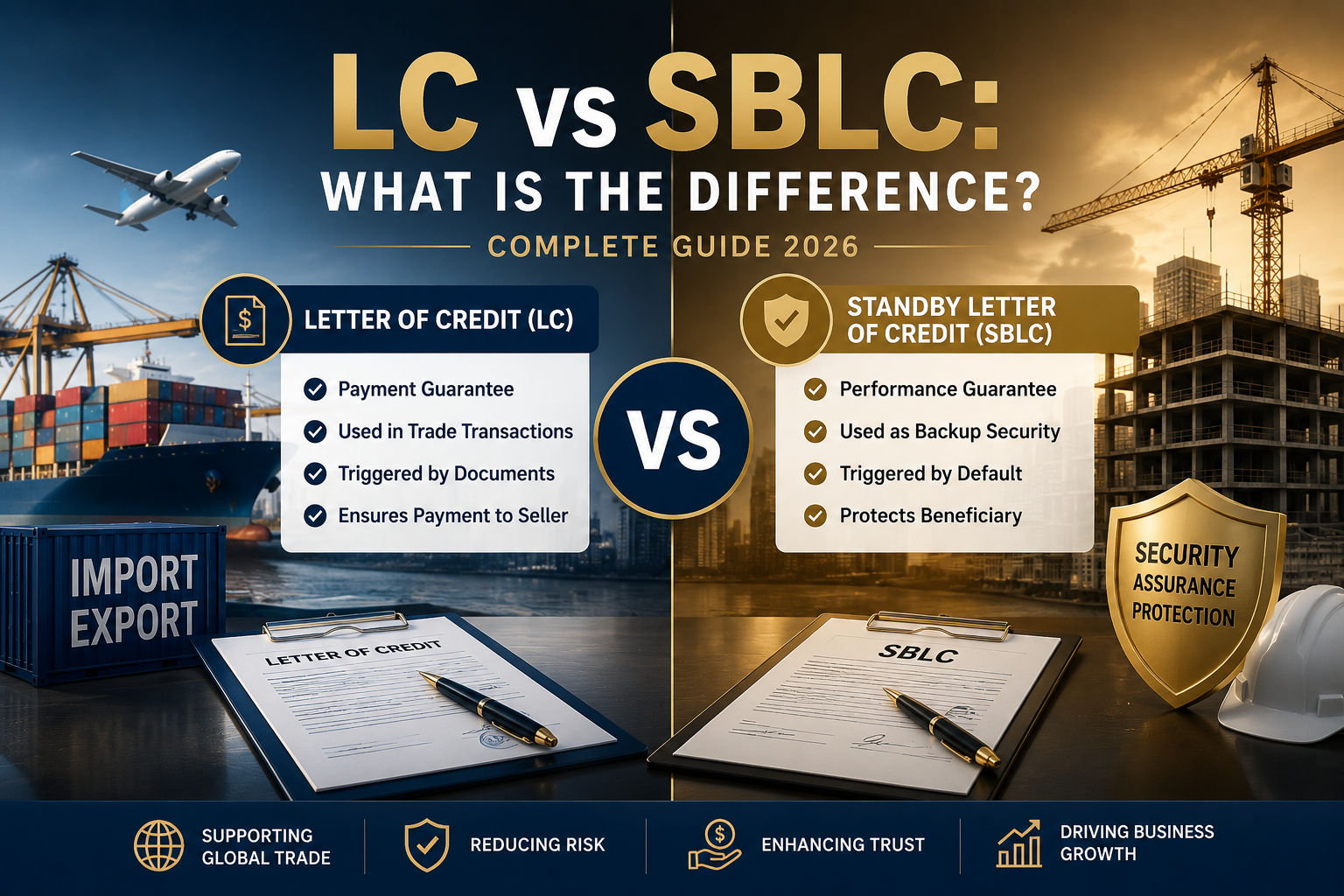
A Letter of Credit is one of the most common trade finance instruments used by importers and exporters. It is a bank-issued undertaking that supports payment to the seller once agreed shipping and documentation conditions are met.
Common LC types include Sight LC, Usance LC, Confirmed LC, Revolving LC, and Transferable LC.
2. Bank Guarantee (BG)
A Bank Guarantee provides financial assurance if one party fails to fulfill contractual obligations. Philippine businesses may use guarantees for construction projects, government tenders, import contracts, infrastructure development, and supplier agreements.
3. Documentary Collection
In documentary collection, banks help facilitate the exchange of trade documents between buyer and seller. It is usually cheaper than a Letter of Credit but does not provide the same bank payment undertaking.
The main types are Documents Against Payment (D/P) and Documents Against Acceptance (D/A).
4. Trade Credit Insurance
Trade credit insurance protects exporters against buyer default or non-payment. This can be useful for Philippine exporters selling to unfamiliar overseas buyers or entering new international markets.
5. Invoice Financing
Invoice financing allows a business to borrow against unpaid invoices to improve liquidity. SMEs often use invoice financing to pay suppliers, manage payroll, maintain inventory, and cover operational expenses while waiting for customer payments.
6. Supply Chain Financing
Supply chain finance allows suppliers to receive early payment while buyers maintain longer payment terms. This improves working capital for both sides and supports smoother supply chain performance.
| Instrument | Common Use | Best For |
|---|---|---|
| Letter of Credit | Payment security through bank-reviewed documents | Importers and exporters |
| Bank Guarantee | Contractual or performance assurance | Contractors, suppliers, project companies |
| Documentary Collection | Document exchange through banks without payment guarantee | Trusted trading partners |
| Trade Credit Insurance | Protection against buyer default | Exporters entering new markets |
| Invoice Financing | Receivable-backed working capital | SMEs and suppliers waiting for payment |
| Supply Chain Finance | Early supplier payment with extended buyer terms | Large buyers and supplier networks |
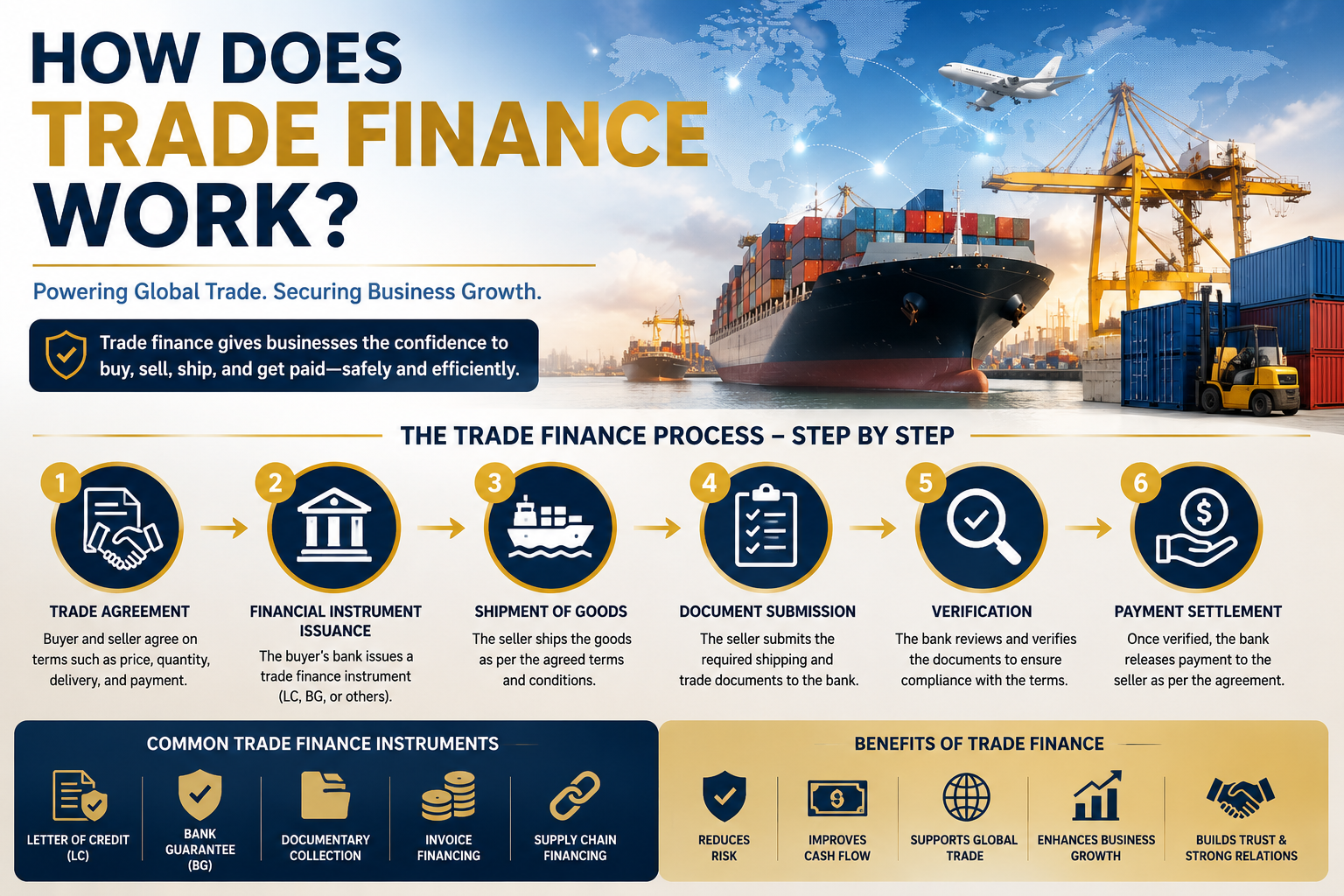
Trade Finance Process in Philippines
A trade finance transaction should follow a clear process so the buyer, seller, bank, and supporting parties understand the payment structure and documentation requirements.
Key Trade Finance Documents
Accurate documentation is critical in trade finance because discrepancies can delay approval, shipment release, or payment. Philippine trade finance transactions commonly involve:
- Commercial invoice or proforma invoice
- Bill of Lading or Airway Bill
- Packing list
- Certificate of Origin
- Insurance certificate
- Inspection certificate, where required
- Customs documentation
- Purchase order, contract, or supplier agreement
- Buyer, seller, and beneficiary details
Industries Using Trade Finance in the Philippines
Trade finance is used across many Philippine industries where import, export, project delivery, inventory, or supplier payments are important.
Electronics and Semiconductor Sector
Manufacturers use trade finance to import components, manage supplier payments, and export finished products to global markets.
Agriculture and Food Exports
Exporters of bananas, coconuts, pineapple products, seafood, and other agricultural goods use trade finance for international shipments and buyer payment security.
Construction and Infrastructure
Construction companies may use bank guarantees, supplier financing, and project-related instruments for tenders, performance obligations, and large infrastructure requirements.
Manufacturing, Retail, and Distribution
Manufacturers and importers rely on trade finance to purchase machinery, raw materials, consumer goods, and inventory from overseas suppliers.
Benefits of Trade Finance for Philippine Businesses
- Better cash flow: Businesses can access liquidity without waiting for buyer payments.
- Lower risk: Structured instruments can reduce non-payment and performance risks.
- International expansion: Companies can trade more confidently with overseas partners.
- Increased trust: Bank-supported instruments improve credibility with suppliers and buyers.
- Flexible structure: Solutions can be matched to transaction size, payment terms, and risk profile.
Challenges in Trade Finance in Philippines
Despite its advantages, businesses may face challenges such as strict banking compliance, documentary discrepancies, currency fluctuation, collateral requirements, limited SME awareness, and international sanctions or regulatory checks.
Proper financial advisory and experienced documentation support can help businesses prepare stronger transaction files and reduce avoidable delays.
Trade Finance Regulations in Philippines
Trade finance activities in the Philippines are influenced by banking regulations, anti-money laundering requirements, international trade rules, and documentary credit standards. Banks commonly apply Know Your Customer (KYC), Anti-Money Laundering (AML), counterparty screening, and transaction documentation reviews.
Relevant frameworks and institutions may include the Bangko Sentral ng Pilipinas, Anti-Money Laundering regulations, International Chamber of Commerce rules, and UCP 600 for documentary credits.
Top Banks Offering Trade Finance in Philippines
Several major Philippine banks provide trade finance services, including BDO Unibank, Bank of the Philippine Islands, Metropolitan Bank & Trust Company, Land Bank of the Philippines, and Security Bank Corporation. International banks and private financial institutions may also support Philippine trade businesses depending on transaction type and eligibility.
Trade Finance vs Traditional Business Loan
Trade finance is generally transaction-based, while a traditional business loan is usually broader funding with a fixed repayment structure.
| Feature | Trade Finance | Traditional Business Loan |
|---|---|---|
| Purpose | Supports a specific trade transaction | General business funding |
| Risk Coverage | May include payment or performance protection | Limited transaction protection |
| Payment Structure | Linked to shipment, documents, invoice, or contract | Fixed repayment schedule |
| International Use | Highly suitable for import and export trade | Less specialized for trade documents |
| Documentation | Trade-related documents are central | Financial statements and credit profile are central |
Future of Trade Finance in Philippines
The trade finance sector is evolving through digital banking adoption, electronic trade documentation, fintech financing platforms, supply chain digitization, blockchain-based document verification, and growing ASEAN trade activity. More SMEs are expected to explore digital and structured finance solutions as cross-border business expands.
How to Choose the Right Trade Finance Solution
Businesses should consider transaction size, country risk, supplier relationship, payment terms, cash flow needs, industry requirements, documentation readiness, and cost of financing before selecting a trade finance solution.
At National Finance, the focus is on understanding the real business requirement first, then guiding the client toward a suitable structure across trade finance, banking instruments, corporate funding, or related advisory solutions.
Final Thoughts
Trade finance plays a crucial role in supporting economic growth and international commerce in the Philippines. From Letters of Credit and Bank Guarantees to invoice financing and supply chain finance, these solutions help businesses trade securely, manage liquidity, and strengthen international relationships.
Companies that understand and use trade finance effectively can gain a stronger competitive advantage in global markets.

Reviewed by National Finance Insights
National Finance publishes practical finance guides for businesses covering structured finance, trade finance, corporate funding, banking instruments, and transaction readiness.
Trade Finance in Philippines FAQs
Common questions businesses ask before reviewing a trade finance requirement connected to the Philippines.
What is trade finance in the Philippines?
Trade finance in the Philippines refers to financial instruments and banking solutions that help businesses manage import, export, payment, documentation, and working capital needs in trade transactions.
Is trade finance the same as a business loan?
No. Trade finance is usually linked to a specific shipment, invoice, contract, supplier payment, or trade transaction. A business loan is usually broader funding with a repayment schedule.
Which businesses use trade finance in the Philippines?
Importers, exporters, manufacturers, distributors, construction companies, agriculture exporters, suppliers, and SMEs involved in domestic or international trade commonly use trade finance.
What documents are needed for trade finance?
Common documents include invoices, purchase orders, contracts, Bill of Lading, packing list, Certificate of Origin, insurance documents, customs documents, buyer and seller details, and company documents.
Can SMEs in the Philippines use trade finance?
Yes. SMEs can use trade finance to improve cash flow, support supplier payments, manage unpaid invoices, and complete larger import or export transactions more confidently.
Related finance topics
Continue reading practical guides connected to trade finance, structured instruments, and business funding.
Discuss your trade finance requirement with National Finance.
If your business is handling an active transaction involving import, export, supplier payment, LC, BG, invoice finance, or supply chain finance, our team can review the structure and guide the next step.